
A goalie can steal a hockey game without saying a word, and that silence is part of why the debate gets so heated. The fight over goalie equipment size is not only about inches of foam; it is about what fans believe a save should look like. American hockey fans see the tension every winter, from NHL broadcasts to high school rinks where parents argue from cold bleachers. Some want more open net and more goals. Others see every trim of gear as a small insult to a position built on pain, nerve, and trust. The truth sits in the crease, not in either shouting corner. Rules have to stop gear from becoming a wall, yet they also have to protect the person facing 90-mile-per-hour shots. That is why smart sports rule debates keep coming back to this issue. It touches scoring, safety, tradition, coaching, and the strange pride goalies take in looking half-human and half-machine. The debate also tells casual fans why goalie highlights can feel both heroic and suspicious.
Why Goalie Equipment Size Still Divides the Crease
Old-school hockey people do not argue over goalie gear because they hate offense. They argue because the goalie has always been the sport’s oddest job. Skaters chase space. Goalies erase it. That basic conflict makes every pad rule feel personal, since a league can change the visual balance of the sport by trimming a sleeve, a pant edge, or a thigh rise.
Why smaller gear feels like an attack on tradition
The purist view starts with memory. A fan who grew up watching stand-up goalies remembers brown pads, heavy gloves, and rebounds that kicked into danger. Then the butterfly era arrived, and the net seemed to shrink. Pads became lighter, wider in feel, and better built for sealing ice. To that fan, the modern goalie did not only improve. He gained armor that changed the argument. The old save had more mess in it, and some fans miss that mess because it looked human.
That feeling has some truth behind it. If you compare an older NHL photo with a modern crease picture, the modern goalie often looks square, calm, and huge. Yet the counterpoint matters. Modern shooters release faster. Sticks load harder. Players can change the shooting lane in a half step. A smaller chest protector on a goalie facing that pace is not the same as a smaller chest protector in 1986. The puck arrives from stranger places now, through screens, seams, and late tips that punish any tiny opening.
This is where the tradition argument gets tricky. Some fans say the game should reward shooters more. Fine. But the game also rewards shot blocking, defensive layers, faceoff plays, and video scouting. Blaming only the goalie’s body outline is too easy. The pad is visible, so it gets blamed first. A system that lets five skaters collapse into the slot can hide behind that complaint.
How NHL goalie gear rules changed the eye test
The NHL goalie gear rules have tried to pull the position away from “make the goalie smaller” and toward “make the gear fit the goalie.” That difference matters. A small goalie should not gain the outline of a much larger one. A tall goalie should not be punished for having long limbs. The rule fight is less about making everyone tiny and more about keeping each body honest. That is a better standard than nostalgia, because nostalgia never measured anything.
A concrete example is the chest-and-arm area. When the league moved toward body-shaped protection, the point was not to leave goalies exposed. It was to remove empty space where no body part sat behind the foam. That sounds simple from a couch. In a dressing room, it means a goalie has to trust a new unit after thousands of shots with the old one. Trust is not a small thing when the next shot may hit under the arm.
The non-obvious part is that rule changes can make the best goalies look better, not worse. Extra bulk helps average reads look cleaner because pucks hit gear that was already there. Tighter gear asks more from feet, hands, depth, and timing. Purists who want skill to matter should like that. Many still flinch because the change arrives through measurement, not romance. Hockey loves the old tale, but a tape measure can protect the craft from turning into costume.
Protection, Fairness, and the Shape of a Save
Once the eye test settles, the better question appears: what should gear be allowed to do? It should protect bone, muscle, joints, and nerves. It should not create a second body around the first one. That line is hard to draw, and it gets harder when manufacturers can design legal shapes that still feel larger in the crease. The best rules make that line plain enough for fans and flexible enough for bodies.
Why body-based fitting changed the argument
Body-based fitting changed the debate because it moved away from one crude limit for every goalie. Goaltender equipment standards now focus more on the player’s actual build. That matters in a country where hockey keeps growing beyond its old northern base. A goalie in Minnesota, Arizona, Michigan, or Texas may have the same dream but a different body type, and rules have to work for all of them. A sport that wants more goalies cannot build its rule logic around one old picture of what a goalie “should” look like.
Think of two goalies. One is 6-foot-5 with long arms and narrow shoulders. The other is 5-foot-11 with a compact build and wide stance. A single “large” chest unit tells you almost nothing about whether either one is gaining unfair coverage. The better question is whether the protection follows the body or floats outside it. That is where fitting gets serious, because two units can share a size tag and behave in opposite ways.
That is why the official rule language and inspection process matter more than social media outrage. The official NHL Video Rulebook gives fans a better starting point than a slow-motion clip after a playoff loss. A puck hitting a shoulder cap may look unfair from one angle, yet the same cap may be legal, fitted, and needed to keep the goalie safe. The camera can flatten depth and turn a clean save into a conspiracy.
Where safety fears still have a fair point
Goalies are not being dramatic when they complain about stingers. Anyone who has watched a shot catch the gap near the collarbone knows the body language. The goalie freezes for a second, bends forward, then pretends he is fine because the faceoff is coming. That moment should stay in the rule debate. It is not soft. It is honest. Hockey has a bad habit of calling pain “character” after the fact.
A chest protector can be legal and still feel wrong to the person wearing it. One model may close a gap when the goalie stands tall but open it when he drops into the butterfly. Another may protect the ribs well but leave the bicep feeling exposed on shots through traffic. This is why blanket fan demands can sound brave and turn careless fast. The body does not care that the rule looked neat on paper.
The counterintuitive insight is that safer gear can sometimes look smaller. Better foam, smarter breaks, and cleaner body mapping can protect without adding square footage. The future should not be thin gear. It should be smarter gear. Purists often miss that because they frame the issue as old toughness against new padding, when the better fight is dead space against live protection. The best rule does not punish fear; it removes the excess that has nothing to do with courage.
The Scoring Debate Is Not as Simple as Bigger Pads
Every few seasons, someone says hockey needs more goals, and the goalie becomes the first suspect. It is an easy target. The goalie stands in the blue paint, covered in gear, blocking the thing fans paid to see. Yet scoring is shaped by far more than foam. Systems, shot quality, traffic, officiating, rink habits, and player development all sit in the same room. Scoring pressure also rises in playoffs, where one blocked chance can feel like a verdict on the whole sport.
Why shooters still lose to angles before equipment
A great goalie beats shooters before the puck leaves the stick. He sets his feet, reads the blade, holds depth, and takes away the shot the player wants most. By the time the puck hits a pad, the save may already be won. That is why trimming gear alone will never turn a weak shooting chance into a highlight. A bad-angle wrister into the logo is not proof that the chest unit is too large.
Watch an NHL power play from the low angle. The goalie is not only reacting. He is mapping threats. Net-front screen. Backdoor stick. Slot bumper. Far-side one-timer. If he cheats a half step, the puck is in. If he stays square, fans may think the puck hit “too much gear.” Often it hit a goalie who arrived on time. The best ones make panic look boring, and boring saves make fans suspicious.
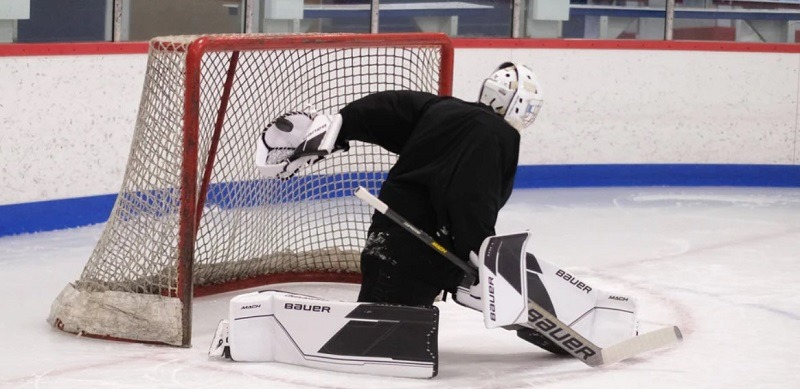
This is where hockey goalie pads get blamed for work done by skating and reading. A butterfly save can look passive because the pad seals the ice. The work happened earlier. The hips opened. The edge held. The glove stayed free. A fan sees foam. A goalie coach sees a chain of decisions. Take away an inch without reading that chain, and you may fix the wrong problem.
How hockey goalie pads changed coaching habits
Modern coaching teaches goalies to make gear part of structure, not a last-second shield. That is a major shift. Young goalies learn post integration, reverse-VH choices, controlled rebounds, and traffic reads in ways that older generations often had to invent by feel. The gear supports those habits, but it does not create them by itself. A pad can seal the ice only after the goalie gets it there.
A youth goalie in Massachusetts or Colorado can now watch NHL clips, copy crease movement, and buy pads shaped for butterfly mechanics. That has raised the floor. More average goalies can look organized because the teaching is better. If fans want more goals, they should also study defensive coaching, not only the pad catalog. The modern save is often a team save wearing one person’s name.
The surprise is that smaller gear might not create the scoring jump people expect. Shooters adapt, yes. Goalies adapt too. They may challenge more, manage rebounds better, or change glove presentation. Hockey is not a lab test where one inch disappears and scoring rises in a straight line. It is a living argument on skates. That is why hockey training culture matters when judging any rule change.
What Youth Hockey and Beer League Goalies Learn From the Fight
The pro debate spills downward. Parents hear NHL arguments and start judging a 12-year-old’s pads as if he is hiding illegal gear in a playoff series. Adult league players do the same, usually after being stopped on a breakaway. Yet local hockey needs a calmer version of the discussion, because cost, safety, and access matter more outside the NHL.
Why goaltender equipment standards matter below the NHL
USA Hockey and local leagues need clear goaltender equipment standards because confusion gets expensive. Goalie gear already costs families more than most skater setups. If a parent buys used pads and later hears they may not meet a league rule, the issue is not theory anymore. It is a weekend budget problem. For many families, goalie gear is not a luxury purchase; it is the price of letting a kid play the position he loves.
At the youth level, the point should be plain: protect the child, fit the child, and avoid unfair extra blocking area. That order matters. A growing goalie may need new pads sooner than a skater needs new shoulder pads. Hand-me-down gear can be a gift, but it can also be too large, too loose, or unsafe around the knee stack. A pad that looks “pro” can teach a young goalie to sit back instead of move.
For adult players, the issue shifts. A beer league goalie may wear older gear because new equipment costs too much. Nobody wants a Tuesday night league turning into an inspection court. Still, obvious oversized gear creates resentment. Clear rules help because they stop the argument before it becomes personal. The best local standard is one people can understand before the puck drops.
How the next argument may be about skill, not size
The next wave of debate may not center on width. It may center on how gear shapes technique. Pads that rotate cleanly, gloves that present wide, and chest units that seal gaps can change how goalies move. A legal pad can still encourage a style that feels unfair to shooters who remember a looser, messier game. That tension will grow as equipment gets lighter and more precise.
That does not mean the gear is wrong. It means hockey has to keep asking better questions. Does the equipment protect the body? Does it reward good movement? Does it leave enough net for a skilled shot? Does it price young goalies out of the position? Those questions are stronger than the tired complaint that goalies look too big. They also make room for goalies, shooters, coaches, and parents to argue from the same sheet of ice.
The bridge to the NHL is clear. Pro rules set the mood for everyone else. If the top league treats fit, safety, and fairness with care, youth hockey can borrow that mindset without copying every measurement fight. The sport needs goalies. It also needs goals. Keeping both is harder than yelling from the glass. It asks for patience, and hockey fans are not famous for patience.
Conclusion
The argument will not end because it is not only a rulebook issue. It is a culture issue. Hockey asks goalies to be brave, strange, calm, and half-hidden under equipment, then asks everyone else to decide how much of that equipment counts as fair. The smartest path is not a return to old pain or a free pass for oversized gear. It is fit-first regulation, honest inspection, and gear that protects what it should without covering what it should not. That is why goalie equipment size will stay a live debate among purists, coaches, parents, and NHL fans. The crease is where hockey tests its own values: skill against structure, safety against spectacle, memory against progress. If the sport gets that balance right, it will not have to choose between great saves and great scoring chances. It can demand both, and that is the standard worth defending. That standard should guide pro hockey, school rinks, and every weekend league that copies the NHL mood.
Frequently Asked Questions
Why do hockey fans argue about goalie equipment rules?
Fans argue because goalie gear affects how much net appears open, how scoring feels, and how fair saves look. Some believe large gear hides weak technique. Others believe modern shooters make strong protection necessary. Both sides care about the same thing: a game that feels earned.
Are NHL goalie pads still limited by size rules?
Yes, NHL goalies play under detailed equipment rules that cover fit, shape, and allowed dimensions. The point is not only smaller pads. The league also wants gear to match the goalie’s body so extra blocking space does not replace skill.
Do smaller goalie pads automatically increase scoring?
No. Smaller pads can open space, but scoring also depends on shot quality, screens, passing speed, defensive systems, and goalie reads. A well-positioned goalie can stop more with less gear than a poorly positioned goalie wearing larger equipment.
Why do goalies resist equipment reductions?
Goalies resist reductions because they feel every gap, bruise, and stinger. Gear is not a costume to them. It is trusted protection built through repetition. A small change can affect comfort, movement, confidence, and safety during live shots.
How do equipment rules affect youth hockey goalies?
Youth rules matter because families need safe, legal, affordable gear. Oversized pads can teach bad habits, but undersized protection can make a young goalie afraid of the puck. Good fitting is the best middle ground for development.
What is the biggest fairness issue with modern goalie gear?
The biggest issue is dead space. That means padding covering areas where no body part needs protection. Dead space turns equipment into extra net coverage. Proper fitting keeps protection close to the body and makes saves depend more on movement.
Are hockey goalie pads safer now than older pads?
Modern pads are usually lighter, more protective, and better shaped for today’s butterfly style. Older gear often looked smaller but absorbed shots poorly. Safer gear does not have to be larger; better materials can protect while keeping a cleaner profile.
Should hockey make nets bigger instead of shrinking gear?
Bigger nets would change the sport more than most fans expect. Angles, goalie training, records, rink feel, and youth development would all shift. Adjusting gear fit is a narrower fix because it targets unfair coverage without changing the goal itself.

Related Posts