

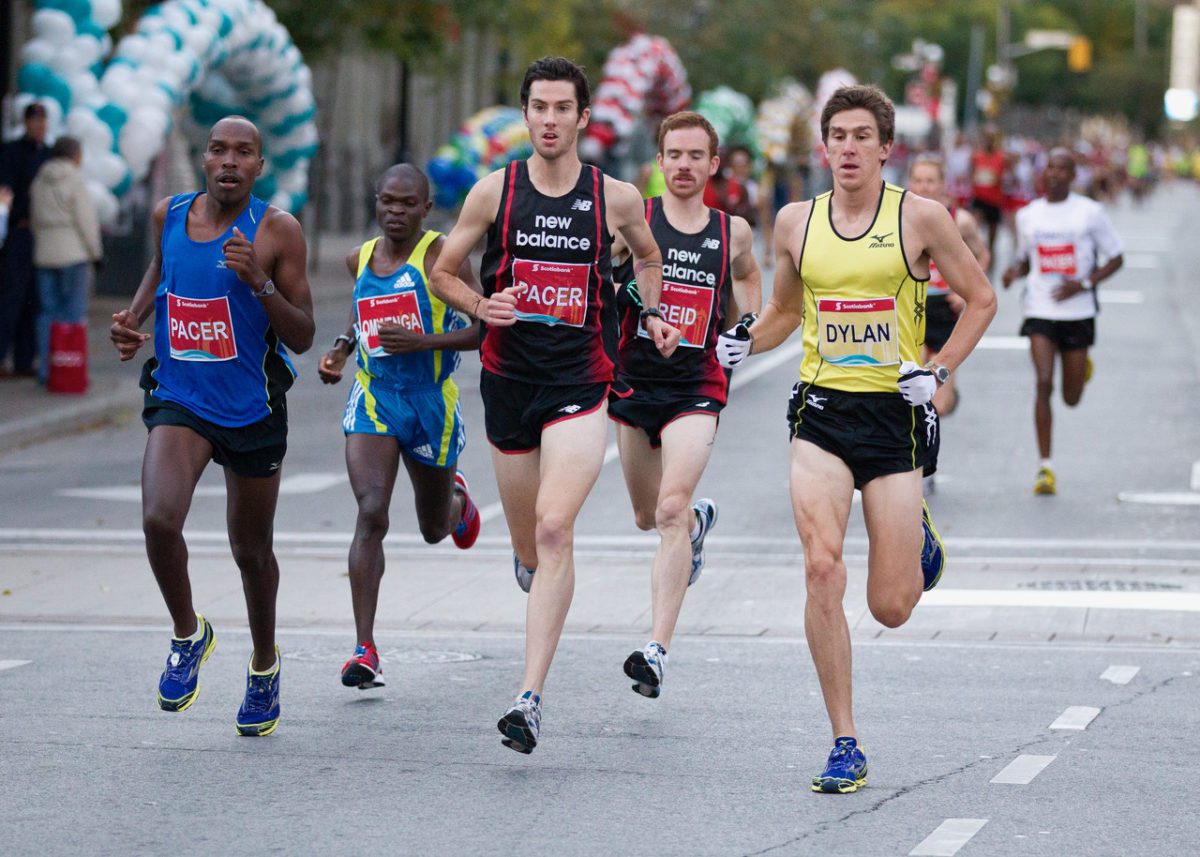
A marathon can turn from a race into a private argument with your own legs. The marathon running wall happens when your body can no longer supply fast energy at the pace you are demanding, so the brain, muscles, and gut all start negotiating at once. Most runners call it a mental collapse, but that is only half true. The mind suffers because the body is running low on easy fuel, heat is rising, muscle damage is building, and every small pacing mistake from earlier miles has finally sent the bill. For U.S. runners training for Boston, Chicago, New York, Marine Corps, or a local city marathon, this matters because the wall is not random bad luck. It is usually a predictable mix of glycogen depletion, poor pacing, and a weak marathon fueling strategy. Good sports performance coverage often misses the point when it treats the wall like drama. It is chemistry with a stopwatch. You can respect it, train around it, and sometimes avoid the worst of it.
Why the Marathon Running Wall Feels Like a System Shutdown
The wall gets its scary name because it does not feel like normal fatigue. Normal fatigue whispers. This bangs on the door. A runner who felt smooth at mile 16 may feel trapped at mile 21, even while the pace on the watch drops by a full minute. The strange part is that nothing has “broken” in the obvious sense. Your shoes are still tied. Your lungs still work. Yet your body has begun protecting itself from the cost of your speed.
What hitting the wall feels like inside the body
Hitting the wall often starts as a pace problem before it becomes a full-body problem. Your stride shortens. Your arms stop driving. The road seems tilted upward, even on a flat course. That feeling is not laziness. Your muscles are asking for fuel that arrives slower than the race demands.
The body prefers carbohydrate when the pace is firm because it can turn that fuel into energy faster than fat. During the first half of a marathon, this feels like a gift. You can hold goal pace and still feel calm. Later, when stored carbohydrate runs low, the same pace becomes expensive.
Here is the non-obvious part: the wall is not always an empty tank. It can be a locked tank. The body may still have fat available, and it may still have some carbohydrate left, but it limits how much power you can produce because the system is under threat. Your brain is not being dramatic. It is trying to keep you upright.
Why mile 20 gets blamed more than it deserves
Runners talk about mile 20 as if it has magic powers. It does not. Mile 20 is where many mistakes become visible. If you ran the first 10K faster than planned because the crowd was loud, those seconds may return as minutes near the end.
At the Chicago Marathon, for example, the early miles can feel friendly: wide roads, loud neighborhoods, cool fall air, and a pace group that makes ambition feel safe. A runner can float through halfway feeling ahead of schedule. That comfort can be a trap. The body keeps a quiet record.
Some runners hit trouble at mile 17. Others survive until mile 23. A few never face the full crash. The number depends on training, size, heat, pace, carbohydrate storage, gut tolerance, and nerve. Mile 20 gets the blame because it sits near the point where those forces often meet.
Glycogen, Fat, and the Fuel Math Most Runners Misread
Fuel talk gets messy because runners hear one simple line: burn fat, save carbs. That is true in a shallow way, but racing is not a slow science fair demo. A marathon asks you to move fast enough that carbohydrate stays central. The longer you run, the more your body has to choose between speed and fuel economy.
Why glycogen depletion changes the pace conversation
Glycogen depletion means your stored carbohydrate has dropped low enough to limit performance. It does not mean every muscle cell is empty at the same moment. Think of it more like a city during a power shortage. Some lights stay on. The stadium lights do not.
This is why your easy pace may still exist after the crash, while your goal pace feels gone. A runner might slow from 8:30 miles to 10:15 miles and still keep moving. That slower pace relies more on energy pathways the body can support under stress.
The mistake is thinking the wall begins when you feel awful. It begins earlier, when the pace is high enough to spend carbohydrate faster than you can replace it. The bad feeling arrives after the debt grows. By then, gels help, but they cannot fully erase the first two hours of spending.
Why fat burning cannot rescue a fast marathon
Fat is a huge fuel source, which makes runners wonder why the body struggles. The answer is speed. Fat takes more oxygen and more time to turn into race energy. That is fine on a long hike. It is less helpful when you are trying to hold marathon pace on tired legs.
This is the part many newer runners miss. You are never burning only one fuel. You are burning a blend. Training can shift the blend so you rely less on carbohydrate at a given pace, but it cannot make fat behave like quick-burning race fuel.
A useful image: carbohydrate is cash in your pocket, while fat is money in a savings account with a slow bank teller. You have plenty of savings. The marathon problem is the checkout line. When the pace is too high, the teller cannot move fast enough.
Pacing Mistakes That Spend Energy Before You Notice
The wall is often called a nutrition problem, but pacing decides how fast the nutrition problem arrives. Good fueling cannot save a reckless first half. Bad pacing burns matches you cannot relight later. This is why experienced marathoners talk about restraint with the tone of people who learned the lesson the painful way.
How early excitement hides an unpaid bill
Race morning changes your judgment. The national anthem, the corral shuffle, the first clean stretch of road, the watches beeping together. You feel stronger than training suggested. That feeling may be honest, but it may not be useful.
Say a runner from Dallas trains for a 4-hour marathon and opens the first five miles 20 seconds per mile too fast. That does not sound wild. It even feels controlled. Yet the body reads those miles as a higher fuel cost, a higher heat cost, and a higher muscle-damage cost. Later, the runner is not paying for one bad mile. They are paying interest.
A counterintuitive truth: the “easy” early miles are the most dangerous miles of the race. Not because they hurt, but because they do not. Pain gives clear feedback. Fresh legs lie politely.
Why even pacing feels too easy until it wins
Even pacing is boring until mile 22. Then it feels like wisdom. The best marathon pacing plans often ask you to feel held back early, steady through the middle, and brave late. That is hard for runners who want the watch to confirm fitness from the start.
A smart race day pacing checklist should include more than goal splits. It should include effort cues. Can you breathe calmly at mile 6? Are you forcing the pace on a downhill? Are you passing people because they slowed, or because you sped up?
The late miles reward runners who protected their choices. That does not mean running scared. It means treating the first half like setup, not proof. The fastest version of you may be the one patient enough to look unimpressive early.
Training and Fueling Choices That Move the Wall Farther Away
You cannot bully the wall with motivation alone. You train the systems that meet it. Long runs, tempo work, easy mileage, strength training, heat practice, and fueling rehearsal all move the risk line. The goal is not to become immune. The goal is to make late-race trouble smaller, later, and less confusing.
How to build a marathon fueling strategy you can digest
A marathon fueling strategy should be practiced before race day because the gut needs training too. Many runners can handle gels while standing in a kitchen. Fewer can handle them at mile 18 with a tight stomach and a rising heart rate.
The American College of Sports Medicine has published guidance that endurance athletes often need carbohydrate during longer exercise, commonly in the range of 30 to 60 grams per hour, with higher amounts used in longer efforts when tolerated through practice. A runner should treat that as a starting zone, not a dare.
Your best marathon fueling strategy is the one you can repeat under race stress. Try gels, chews, sports drink, bananas, or a mix during long runs. Note what sits well. Note what turns your stomach. The winning plan is not the most advanced one. It is the one your body accepts when the course gets quiet.
What long runs teach that race calculators miss
Race calculators can predict a finish time from a tune-up race, but they cannot see your late-mile habits. A 10K result may show speed. A long run shows whether your form falls apart when your brain gets bored and your legs lose pop.
That is why a marathon nutrition checklist belongs beside the training plan, not under it. Long runs teach when you forget to drink, whether caffeine helps or backfires, which socks blister, and how your mood changes when hunger arrives. Small details matter because the wall is often built from small misses.
The counterintuitive lesson is that not every long run should end heroic. Some should end controlled. You want proof that you can finish with judgment still intact. Race day already brings enough drama.
Conclusion
The wall is not a monster hiding at the far end of 26.2 miles. It is a response to fuel use, pace choice, muscle fatigue, heat, stress, and the brain’s safety checks. That is good news, because systems can be trained. The marathon running wall becomes less mysterious when you stop treating it like a character flaw and start reading it as feedback.
For American runners chasing a first finish, a Boston qualifier, or a cleaner second half, the answer is rarely one magic gel or one brutal workout. It is a stack of sane choices: patient pacing, practiced fueling, steady mileage, honest long runs, and enough humility to respect the distance before it teaches you. The marathon does not care how confident you felt in the corral. It cares how wisely you spent what you had. Train for the final 10K, not the starting photo, and you give yourself the best chance to run past the place where others begin to fade.
Frequently Asked Questions
What does hitting the wall feel like during a marathon?
It often feels like a sudden loss of power. Your pace drops, your legs feel heavy, and simple decisions become harder. Some runners also feel dizzy, cold, emotional, or strangely detached from the race. It is more intense than normal tiredness.
Why do runners often struggle around mile 20?
Many runners reach that point after spending too much stored carbohydrate in the first two hours. Mile 20 is not magic, but it often lines up with lower fuel, muscle damage, rising effort, and earlier pacing mistakes becoming harder to hide.
Can beginners avoid hitting the wall in their first marathon?
Yes, but avoidance takes planning. Beginners should pace conservatively, practice fueling during long runs, avoid trying anything new on race day, and respect warm weather. A first marathon should be run with patience because excitement can burn energy too soon.
How much carbohydrate should a marathon runner take during the race?
Many runners aim for 30 to 60 grams per hour, while trained athletes with practiced guts may handle more. The right amount depends on body size, pace, tolerance, weather, and product type. Test the plan in long runs before racing.
Is the wall more mental or physical?
It is both, but the physical side usually starts the trouble. Low carbohydrate availability, fatigue, heat, and muscle damage send strong warning signals to the brain. The mental battle gets harder because the body is already under strain.
Do slower marathon runners hit the wall too?
Yes. Slower runners may spend more total time on the course, which can raise fueling and hydration demands. Their pace may be lower, but the longer duration creates its own stress. Time on feet matters as much as speed.
What should I do if I hit the wall during a race?
Slow down, take in carbohydrate if your stomach allows it, sip fluid, and use short run-walk breaks if needed. Do not panic. A controlled reset can help you finish better than forcing the same pace until the crash gets worse.
Are long runs enough to prevent late-race collapse?
Long runs help, but they are not enough by themselves. You also need pacing discipline, race-specific fueling practice, easy mileage, recovery, and weather awareness. A strong long run without a tested fuel plan can still leave you exposed late.

Related Posts