
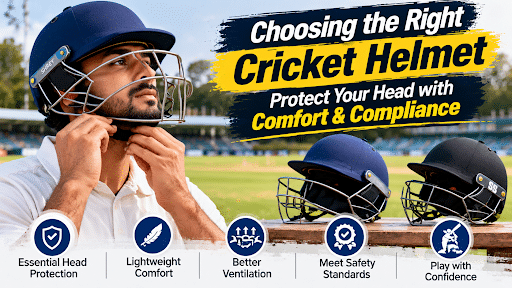
Cricket is an exciting sport, but facing a hard ball at high speed involves risks. A well-fitted cricket helmet is essential protective equipment for batters, particularly when facing fast bowling. It helps reduce the risk of serious head and facial injuries while allowing players to concentrate on their performance.
Choosing a helmet involves more than appearance or brand recognition. Safety certification, face protection, proper sizing, and comfort should guide every decision.
Why Wearing a Cricket Helmet Matters
Batters regularly face deliveries that can rise unexpectedly or move sharply after bouncing. Even experienced players can misjudge a delivery, making head protection particularly important.
A cricket helmet is designed to absorb some impact energy and provide protection around vulnerable areas of the head and face.
However, no helmet can completely eliminate injury risk. Players should wear suitable protective equipment and follow their competition’s safety requirements.
Essential Safety Features of a Cricket Helmet
A reliable helmet combines several protective components that work together.
Protective Outer Shell
The outer shell helps distribute impact forces and protects the head against direct contact with the ball.
Impact-Absorbing Interior
Internal padding and protective liners help manage impact energy while supporting a secure fit.
Faceguard or Grille
The grille protects the face from incoming deliveries. Its positioning and construction are particularly important because an incorrectly fitted faceguard can leave dangerous gaps.
Secure Retention System
A properly adjusted chin strap and helmet fastening system help keep the helmet positioned correctly during movement.
These features should be assessed alongside independent safety certification.
Cricket Helmet Safety Standards and Compliance
Safety compliance should be a priority when selecting protective equipment.
The International Cricket Council recognizes the British Standard BS 7928:2013 for cricket helmets, with the A1:2019 amendment covering additional neck-protection requirements.
The standard includes testing related to ball impacts, facial contact, and protective performance.
Helmets are tested against specified senior or junior ball sizes, so players should check the certification label for their intended category.
Competition requirements can vary. Before participating in organized cricket, confirm that the helmet meets the relevant governing body’s regulations.
Finding the Correct Cricket Helmet Size
A helmet that fits poorly may move during batting or fail to remain correctly positioned.
Players should measure their head circumference according to the manufacturer’s sizing instructions.
The helmet should sit securely without excessive pressure on the forehead or temples.
When checking the fit, gently move the head in different directions. The helmet should remain stable without significant slipping.
An adjustable fitting system may help achieve a comfortable position, but it should not compensate for an incorrectly sized helmet.
How Comfort and Ventilation Affect Batting
Cricket matches can involve extended periods under direct sunlight, particularly during warmer weather.
A helmet with suitable ventilation can improve comfort by allowing airflow around the head.
Interior padding should feel secure without causing uncomfortable pressure.
Weight distribution also matters because a poorly balanced helmet may cause unnecessary discomfort during longer innings.
Players comparing different cricket helmet designs should assess protective features, size, ventilation, and overall fit rather than focusing exclusively on appearance.
Comfort is important, but it should never come at the expense of certified protection.
Common Mistakes When Choosing a Cricket Helmet
Several purchasing mistakes can reduce comfort or compromise protection.
- Selecting a helmet based only on its appearance.
- Ignoring recognized safety certification.
- Choosing an incorrect helmet size.
- Adjusting the grille outside manufacturer instructions.
- Purchasing a damaged or previously impacted helmet.
- Overlooking the appropriate senior or junior ball-size classification.
Avoiding these mistakes helps players make safer equipment decisions.
Maintaining Your Cricket Helmet
Regular maintenance helps preserve the condition of protective equipment.
Inspect the shell, grille, padding, and retention system before use. Look for cracks, loose components, or noticeable deformation.
Clean the helmet according to manufacturer instructions and allow removable padding to dry properly.
Avoid exposing protective equipment to excessive heat or storing it in damp conditions.
A helmet that has sustained a severe impact should be replaced according to safety guidance, even when damage is not immediately visible.
Frequently Asked Questions
1. What safety standard should a cricket helmet meet?
Look for BS 7928:2013 certification and check applicable requirements, including BS 7928:2013+A1:2019 for neck protection.
2. How tight should a cricket helmet fit?
It should fit securely without slipping or creating excessive pressure. Follow the manufacturer’s sizing and adjustment instructions.
3. Can beginners use professional cricket helmets?
Yes, provided the helmet is correctly sized, appropriately certified, and suitable for the player’s age and ball type.
4. Should a cricket helmet be replaced after an impact?
A severe impact can damage protective components even without visible cracks. Follow manufacturer and governing-body replacement guidance.
5. Is ventilation important in cricket helmets?
Yes. Ventilation can improve comfort during extended batting sessions, particularly in warm playing conditions.
Conclusion
Choosing the right cricket helmet requires careful consideration of safety certification, protective construction, fitting, and comfort. A suitable helmet should provide reliable protection without unnecessarily restricting natural movement.
By checking recognized safety standards, selecting the correct size, and maintaining equipment properly, cricketers can make informed decisions about protecting themselves during practice and competitive matches.

Related Posts